A low sheet price does not tell you whether a plywood dealer can supply the right grade, preserve it in storage, deliver full sheets safely, or replace defects before installation. By checking the dealer, the sheets, the paperwork and the delivery process in that order, you can reduce material failures and compare quotations on the cost of usable installed panels.
Key takeaways
- Ask for manufacturer authorisation and recent supply records.
- Inspect sheet edges, surfaces, stamps, seals and moisture damage.
- Match plywood grade and thickness to the room and application.
- Demand itemised quotations, delivery dates and replacement terms.
How to compare plywood dealers beyond brand names
A lower sheet price does not make a better dealer. Before shortlisting plywood dealers in Pune, compare proof of supply, storage, delivery control and replacement terms. An authorised plywood dealer should show manufacturer or distributor authorisation, not merely display a familiar brand.
Ask to inspect representative sheets before dispatch, especially for kitchen carcasses and bathroom-adjacent cabinets.
Use this dealer reliability checklist:
- Confirm plywood stock availability for the required grade, nominal thickness and quantity. Ask whether the sheets are physically in the warehouse or only available on order.
- Record the manufacturer’s BIS licence number from the sheet or packaging, then verify through the BIS licence-search system that it covers the stated Indian Standard and product category.
- Require an invoice naming the brand, grade, nominal thickness and quantity. Treat “marine”, “waterproof” and “BWP” as insufficient unless the purchase order names the applicable standard, such as IS 303 or IS 710.
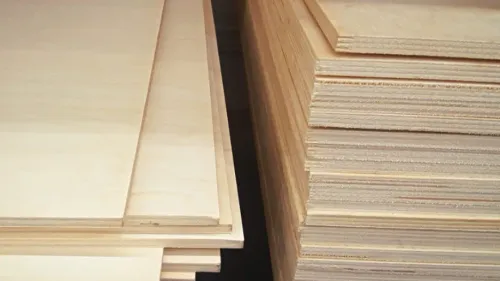
- Inspect storage: sheets should lie flat on level bearers, raised above the floor and protected from rain and direct sun. Leaning or outdoor stacks increase bowing and face-checking risk.
- Get delivery details in writing, including full-sheet handling, narrow-lane vehicle access, lead time and replacement of transit-damaged panels before cutting begins.
- Compare installed cost, adding cutting waste, transport, loading, edge-banding, adhesive, balancing laminate and replacement allowance.
| Check | Evidence to request | Warning sign |
|---|---|---|
| Authorisation | Current manufacturer or distributor confirmation | Brand display only |
| Stock | Countable sheets matching your specification | “Available” without a warehouse check |
| Replacement | Written damage-replacement terms | Installer must accept damage |
| Support | Grade and application advice in writing | Dealer avoids technical questions |
How to inspect plywood for authenticity and damage
A genuine, sound sheet has traceable markings, even construction, stable dimensions and no moisture damage. Treat the ISI mark as a starting point, not proof: record the manufacturer’s BIS licence number from the sheet or packaging and check it in the BIS licence-search system against the relevant Indian Standard and product category.
The invoice must name the brand, grade, nominal thickness and quantity.
1. Compare the sheet markings with the invoice. Missing licence details, inconsistent logos, spelling errors or vague “waterproof” claims are warning signs for counterfeit plywood identification.
2. Inspect the face and back veneers under good light. Reject sheets with swelling, stains, face checking, delamination, loose knots or poorly bonded edges.
3. Examine an exposed cut edge or an approved sample. Look for evenly bonded plies; plywood voids and overlaps inside the core become weak points around screws, sink cut-outs and trimmed edges.
4. Measure thickness at several points with a caliper. A large variation from the stated nominal thickness signals poor manufacturing or an unsuitable batch.
5. Place the sheet on a flat surface and check plywood warping, bowing and twisting. Do not accept a sheet that rocks or leaves a visible gap.
6. Inspect the storage area. Sheets must lie flat on level bearers, raised above the floor and protected from rain and direct sun. Wall-leaning or outdoor stacks transfer acclimatisation and monsoon moisture risk to your installer. Ask the dealer to replace any transit-damaged sheet before cutting begins.
Which plywood grade, material and thickness fit your renovation
Use plywood for kitchen carcasses, bathroom-adjacent furniture and load-bearing shelves; choose MDF or particle board only for dry, low-impact interiors. Solid wood suits visible frames and doors when movement, cost and finishing are acceptable.
| Area | Suitable material and grade | Practical thickness |
|---|---|---|
| Kitchen carcass and shutters | BWR plywood for normal humidity; BWP plywood where leaks or repeated wetting are credible | 16–19 mm carcasses; 6–12 mm backs and shutters, as designed |
| Bathroom-adjacent vanity | BWP plywood; marine plywood only when the purchase order names the required IS 710 specification | 18–19 mm carcass; seal every cut edge and joint |
| Dry wardrobes and cabinets | Interior-grade plywood for dry rooms; MDF gives a smoother painted finish, while particle board costs less but holds screws and moisture less reliably | 16–19 mm carcass; 6–9 mm back |
| Long shelves and heavy shutters | Plywood or blockboard for stiffness; increase thickness or add support as span and load rise | 19–25 mm, based on span |
Do not treat “waterproof,” BWP and marine as interchangeable. Name IS 303 for general plywood or IS 710 where marine-plywood specification is required, then verify the product and BIS licence number. Interior-grade plywood comparisons should include veneer quality, voids, screw holding and edge sealing—not labels alone.
A thicker sheet cannot compensate for poor support or an unsealed edge.
What documents and quotation details should you demand
Put every promised specification and commercial term in the purchase order, not only in a WhatsApp message or verbal quote. Name the applicable standard and grade: IS 303 plywood for general applications or IS 710 marine plywood where that specification is required. “Waterproof” or “marine” alone is not sufficient.
- State manufacturer, brand, grade, nominal thickness, sheet dimensions, quantity, batch number and the manufacturer’s BIS licence number. Verify that the licence covers the stated Indian Standard and product category.
- Record the unit rate, taxable value, GST rate and amount, freight, unloading charges, payment schedule, quotation validity, delivery date and cancellation terms.
- Attach the approved laminate or finish reference where panels are included. Specify vertical-grade, horizontal-grade or compact laminate, its thickness, and whether adjacent panels must come from one production batch.
- Demand exact fire-retardant, low-emission or environmental certificates. Each document must identify the tested construction, thickness, test method and validity; a surface-laminate certificate does not certify the plywood substrate.
- Write plywood warranty terms, exclusions for storage, cutting and installation, claim deadlines, and the replacement process for delamination, warpage or transit damage.
| Document | Check before accepting delivery | Why it matters |
|---|---|---|
| Plywood tax invoice | Brand, grade, thickness, quantity, GST and batch details | Establishes traceability and supports a warranty claim |
| Delivery challan | Sheet count, condition, date and consignee | Records shortages or visible damage |
| Packing label | Manufacturer, standard, batch and BIS licence number | Links the sheets to certified production |
| Warranty document | Coverage, exclusions and claim contact | Prevents disputes after installation |
How delivery and technical support affect project risk
A low sheet price does not protect the schedule if delivery leaves you with bowed edges, broken corners or too little usable area. Confirm support before any panel is cut, because replacement after fabrication can mean a new laminate, labour charge and installation delay.
1. Ask whether plywood delivery Pune includes full sheets carried flat, not folded or dragged, and whether the dealer can send a timed vehicle through your site’s narrow lane. Confirm that transit-damaged plywood will be replaced before cutting begins.
2. Check the dealer’s storage area. Sheets should lie flat on level bearers, raised above the floor and protected from rain and direct sunlight; leaning stacks and outdoor storage transfer warpage and face-checking risk to your installer during Pune’s monsoon.
3. Request plywood technical support before finalising the cut list. The dealer should help assess representative sheet edges for core gaps, overlapping veneers and loose knots, especially for kitchen carcasses and bathroom-adjacent units where sink cut-outs and screw fixing expose weak construction.
4. Compare the quotation by usable installed area. Include cutting waste, transport, loading, squaring, edge-banding, adhesive, balancing laminate and replacement allowance rather than comparing sheet prices alone.
5. Obtain a written plywood replacement policy covering warpage, delamination, shade mismatch and transit damage. Keep the tax invoice, delivery challan, packing label, batch or serial details, brand, grade and thickness; V K Sanghvi can be assessed using this same traceability checklist.
6. Verify the manufacturer’s BIS licence number and confirm that it covers the stated Indian Standard and product category. This record matters when a warranty excludes poor storage, fabrication or installation.
Frequently asked questions
How should you compare plywood dealers beyond brand names?
Compare manufacturer or distributor authorisation, supply records, storage conditions, replacement terms and delivery control.
How can you inspect plywood for authenticity and damage?
Check manufacturer stamps, batch details, packaging seals, sheet edges, flatness, surface condition and signs of moisture exposure.
Which plywood grade and thickness should you choose for renovation?
Choose the grade, material and thickness according to the room’s moisture exposure, structural load and intended use.
What documents and quotation details should you demand?
Request manufacturer authorisation, tax invoice details, product specifications, quantities, prices, delivery dates, warranty terms and replacement conditions.
How do delivery and technical support affect project risk?
Reliable delivery and application guidance reduce incorrect material selection, installation delays, damaged-sheet disputes and replacement costs.