A countertop, vanity, shower wall or sink needs more than an attractive colour: it must tolerate the specific water, heat, chemicals, impact and fabrication demands of its location. By the end, you will know which material and specification questions to put to a Corian sheets supplier before approving samples, cut-outs, seams or an installation quotation.
Key takeaways
- Use bonded acrylic solid surface for seamless counters, coved upstands and integrated sinks.
- Specify non-porous, repairable surfaces for kitchens, vanities, shower surrounds and wall cladding.
- Confirm sheet colour, thickness, dimensions, edge details and sink compatibility before fabrication.
- Require seam locations, joint details, fabrication scope and care instructions in the quotation.
Which solid surface suits each kitchen or bathroom application?
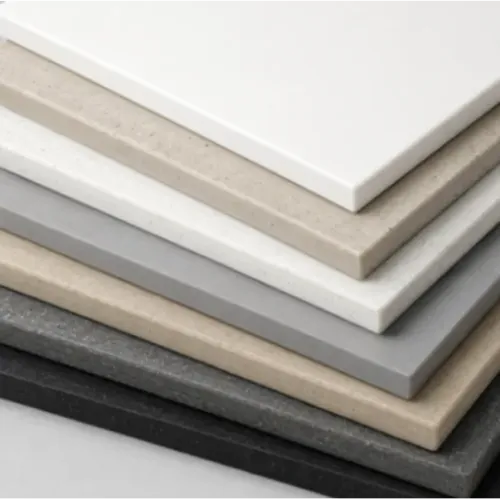
Acrylic solid surface suits countertops, vanity tops, backsplashes, shower surrounds, integrated sinks and wall cladding when you need bonded seams, coved upstands, thermoformed curves or sanding-based repair.
Its homogeneous colour runs through the sheet, unlike layered laminate on a plywood core: cutting, routing or sanding laminate can expose the decorative layer or substrate, while acrylic can be refinished. Ask a Corian sheets supplier to confirm the fabrication method, not just the colour.
| Material | Advantages | Limits and best uses |
|---|---|---|
| Acrylic solid surface | Nonporous, repairable, bonded seams, curves and integrated sinks | Needs heat protection; excellent for counters, vanities, walls and showers |
| Engineered quartz | Hard, stain-resistant, consistent patterns | Less repairable and thermoformable; strong choice for hard-wearing tops |
| Granite and marble countertops | Natural appearance and heat tolerance | Granite is harder; marble stains and etches more readily; seams remain visible |
| Porcelain slabs | High heat, stain and UV resistance; thin visual profile | Brittle edges, specialised cutting and limited repair; suitable for demanding tops and walls |
| Ceramic tile | Low material cost, replaceable pieces and heat resistance | Grout collects soil and needs maintenance; useful for shower walls and splashbacks |
| Laminate or plywood-based solutions | Lowest cost and broad patterns | Water at edges or cut-outs damages the core; avoid unsealed wet zones |
For quartz versus solid surface, choose quartz for hardness and pattern, but acrylic for an integrated basin or inconspicuous seam. Nonporous is not maintenance-free: seal wall junctions, sink rims and plumbing penetrations, and clean failed seams before mould and dirt take hold.
What kitchen and bathroom conditions should determine the specification?
Start with the room’s failure points, not the colour sample. For kitchen countertop selection, record hot cookware, trivets or heat barriers, knife use, food and oil stains, sink and cooktop cut-outs, dishwasher steam, splash zones and the length of each countertop run.
For a bathroom vanity top, record constant moisture, standing water, soap residue, shower humidity, basin cut-outs and wall-to-counter joints.
- List every exposure, cut-out, overhang and cleaning product before selecting the sheet.
- Ask for the manufacturer’s heat-resistance guidance and support detail. Acrylic is not heat-proof: prolonged heat, thermal shock and hot pans can discolour or damage it, while unsupported spans and cut-outs can crack.
- Request the product’s chemical-resistance table for hair dye, bleach, nail-polish remover, strong acids and drain cleaner. Short incidental contact does not prove resistance to repeated or prolonged exposure.
- Specify cabinet support, cut-out reinforcement and sealed plumbing penetrations. Acrylic cannot compensate for a moving cabinet, weak substrate or poorly supported overhang.
- Check cleaning and repair expectations. Sanding and refinishing can remove many superficial scratches and minor stains, but deep burns, cracks, damaged substrates and failed structural joints need professional repair or replacement.
Treat splash zones, shower walls and dishwasher areas as exposure zones rather than relying on a “stain-resistant” claim. Chemical resistance is product- and exposure-specific; aggressive cleaners can still damage the finish. A complete specification names the surface, supports, barriers, joints and chemicals the room will actually encounter.
How do colour, thickness and sheet features affect the result?
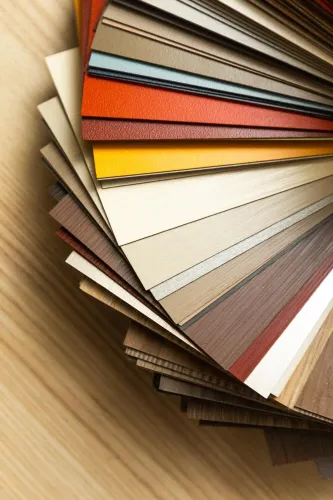
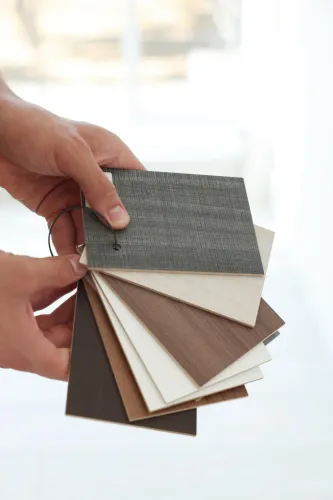
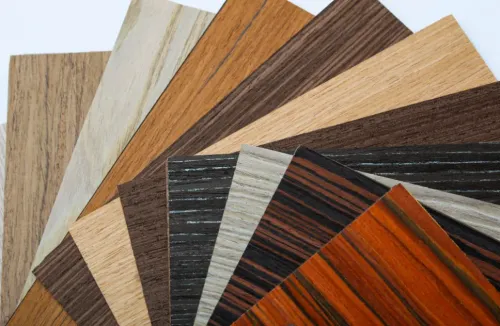
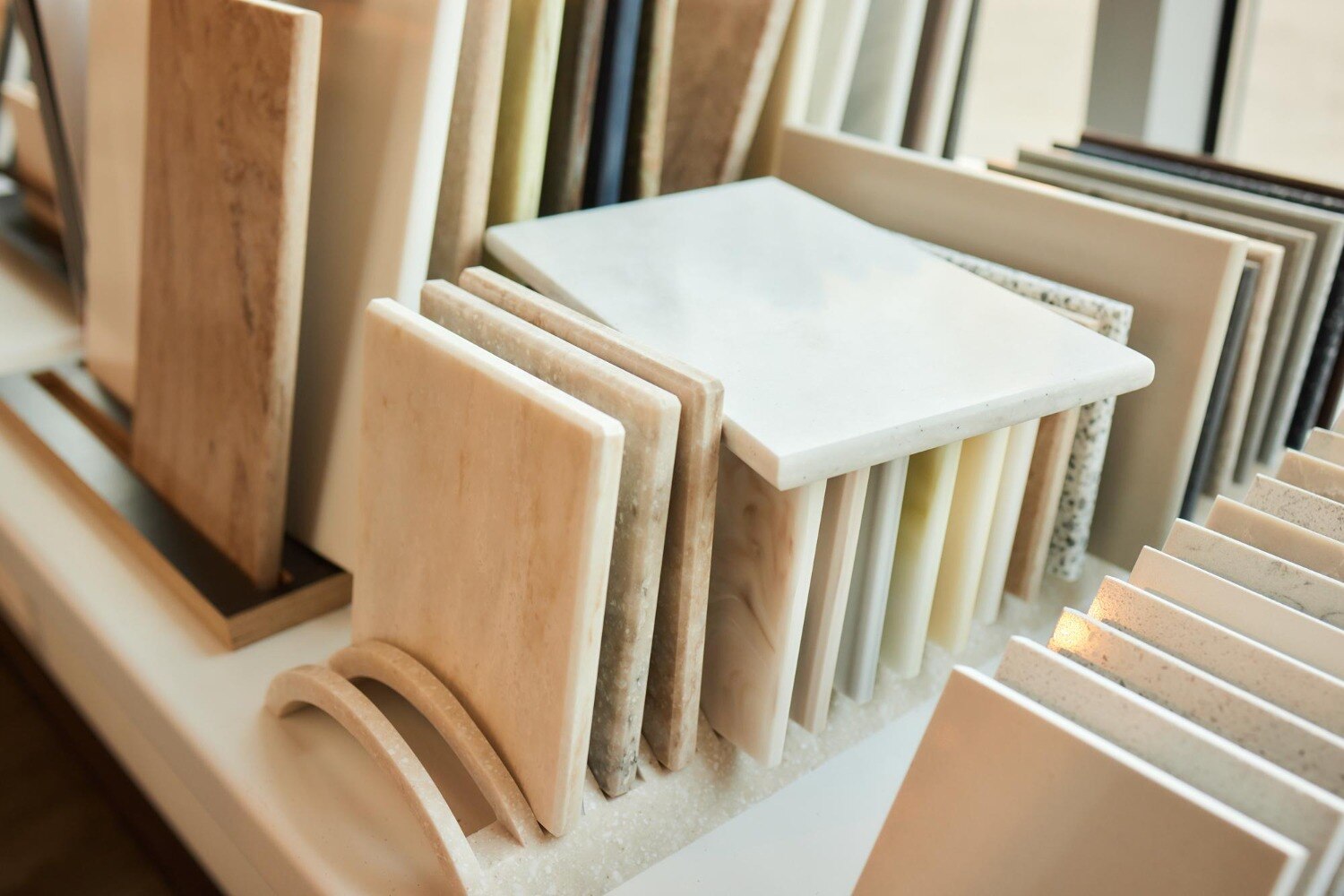
Approve the colour and fabrication details before ordering: dark, saturated or high-gloss sheets reveal scratches, sanding marks, dust, limescale and soap residue more readily than mid-tone or lightly textured finishes. Inspect a full-size sample or completed-project reference in the intended lighting, especially for a black bathroom counter or dark kitchen island.
Finish and colour affect maintenance visibility, not just appearance.
| Option | Visual behaviour | Approval check |
|---|---|---|
| Mid-tone or lightly textured | Hides minor dust and marks better | Confirm colour consistency between sample and available batch |
| Dark high-gloss | Highlights scratches, residue and sanding swirls | View under task lighting and bathroom lighting |
| Patterned or veined | Requires grain direction and seam matching | Allow extra sheets around cut-outs and visual joins |
| Translucent solid surface | Changes appearance with substrate and lighting | Confirm backing, support and edge treatment |
Confirm the solid surface sheet thickness, sheet dimensions, finish and support design. Thin sheets may need a built-up edge, continuous support or a stable substrate; check unsupported spans around sinks, cooktops and overhangs against the manufacturer’s fabrication instructions. A running-metre price can hide greater consumption for veined sheets.
- Record the current product code, sheet size, thickness, finish and batch or lot information.
- Confirm colour consistency, matching sinks and adhesive availability before approval.
- Specify grain direction, seam positions, built-up edges and support around every opening.
- Ask how much allowance covers pattern matching, cut-outs and replacement sheets.
How should seams, sinks and wall joints be planned before fabrication?
Start with a scaled plan, not the countertop’s running length. Count full sheets, cut-outs, edge build-ups, patterned-sheet matching and offcuts; then mark every solid surface seams on the drawing before fabrication.
- Confirm the site dimensions before ordering or cutting: wall angles, cabinet levels, appliance locations, access routes and a site template. Recheck long runs, overhangs and unsupported openings.
- Place seams away from sink cut-outs, cooktops, front edges, high-impact points and areas where water stands. Keep joints out of splash zones when the layout permits.
- Approve the visual joint sample. Seam visibility depends on colour, pattern, grain direction, adhesive colour, fabrication accuracy, sanding and lighting—not simply on the word seamless.
- Specify an integrated sink by basin model, factory-bonded or site-fabricated method, cabinet support, waste access, faucet-hole position and overflow arrangement. An integrated sink removes an exposed rim, but poor support or inaccessible plumbing still causes failure.
- For bathrooms, draw the coved backsplash or sealed upstand, wall-joint sealant, substrate preparation and sealed plumbing penetrations. Use movement-tolerant sealant where the counter meets the wall; a rigid or contaminated joint can crack and admit water.
Require the installer to submit the seam map, support detail and site-measurement record before releasing sheets. This exposes excess sheet consumption from veining and prevents a low quotation based only on running metres from hiding fabrication waste or risky joint positions.
What should a Corian sheets supplier include in the quotation and handover?
A low sheet price can conceal extra fabrication, poor support or a second site visit. Compare Corian sheets suppliers through a written solid surface quotation that records the execution details, not just the brand and rate.
| Quotation item | Require in writing | Why it matters |
|---|---|---|
| Product | Approved product code, colour, finish, thickness, sheet dimensions, batch or lot details and matching adhesive system | Prevents substitution and visible mismatch during repairs |
| Layout | Sink model, seam map, edge profile, cut-outs, support construction and estimated sheet waste | Exposes extra sheets and weak points around openings |
| Work scope | Factory-finished work separated from site fabrication and installation | Shows what the quoted price actually includes |
- Ask for a site inspection before ordering. Confirm who completes site measurement, templating, bonding, sanding, sealing, plumbing penetrations and final inspection.
- Request written support details for overhangs, sink and cooktop openings, cabinet joints and long spans. Thin sheets without continuous support can flex, crack or loosen at cut-outs.
- Obtain the manufacturer’s fabrication instructions, chemical-care guidance, heat-protection rules and a repair or replacement process. Include the finish, adhesive colour and grain direction for patterned sheets.
V K Sanghvi can help Pune interior professionals coordinate branded surface availability with fabrication details and project requirements; use this same checklist to compare its proposal with competing quotations. A complete handover should include the approved drawings, seam map, care sheet, product records and photographs of concealed supports before closure.
Related product
 | Merino Hanex Solid Surfaces Bring your creative ideas to life with Merino – Hanex Solid Surfaces, available at V. K. Sanghvi Pune, a trusted supplier in the region. View product → |
Frequently asked questions
Which solid surface suits kitchen and bathroom applications?
Acrylic solid surface suits countertops, vanity tops, backsplashes, shower surrounds, integrated sinks and wall cladding when you need bonded seams, coved upstands, thermoformed curves or sanding-based repair.
What conditions should determine the solid-surface specification?
Assess exposure to water, steam, heat, stains, cleaning chemicals, impact and sunlight. Use those conditions to select the surface, thickness, edge treatment and installation details.
How do colour, thickness and sheet features affect the finished result?
Colour affects visible seams, dirt and light reflection. Thickness affects stiffness, edge profiles and support requirements. Sheet dimensions, pattern direction, translucency and thermoforming capability affect fabrication and appearance.
What should a Corian sheets supplier include in the quotation?
Ask for the exact product and colour, sheet thickness and dimensions, sink and accessory compatibility, fabrication and installation scope, seam and joint plan, edge details, delivery conditions, care instructions and warranty documents.