The right surface depends on where it will be used, how much water, heat, abrasion and impact it will face, and how easily damaged parts can be repaired. By the end, you will have a practical method for specifying the substrate, decorative surface, supplier checks and site-storage conditions before fabrication begins.
Key takeaways
- Match plywood thickness and grade to moisture, load and joinery demands.
- Compare dealer stock by batch, flatness, edge quality and delivery reliability.
- Select laminate or solid surface for cleaning, heat, seams and repair needs.
- Inspect sheets, store them flat and approve cut-outs before fabrication.
Match the material to the job, not to the showroom sample
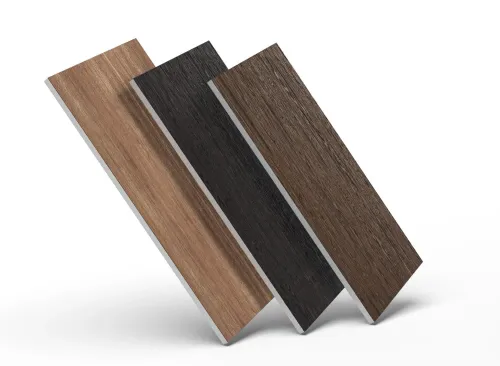
Kitchen carcasses need moisture-tolerant plywood with a durable laminate finish; shutters need a stable, accurately edged substrate. Countertops and vanities demand sealed cut-outs, supported joints and a surface suited to cleaning, heat and repairs.
| Application | Suitable material | Selection point |
|---|---|---|
| Kitchen carcasses | BWR or BWP plywood with laminate | Protect sink zones, screw edges and plinths from moisture. |
| Kitchen shutters | Calibrated plywood with laminate or acrylic solid surface | Use stable sheets and seal every exposed edge; heavy shutters need suitable hinges. |
| Countertops | Acrylic solid surface, or laminate on supported plywood | Solid surface gives jointable, repairable surfaces; laminate costs less but depends on substrate and edge sealing. |
| Wardrobes | Plywood with laminate | Choose abrasion-resistant finishes for handles, edges and frequently used doors. |
| Bathroom vanities | BWP plywood with laminate or acrylic solid surface | Seal basin cut-outs and support the top; water-resistant facing cannot rescue a wet core. |
| Office furniture | Plywood with laminate; compact laminate for heavy-use wet areas | Compact laminate suits self-supporting worktops, partitions and frequently cleaned surfaces. |
| Wall panels | Laminate-faced plywood or compact laminate | Compact laminate avoids an exposed timber core; allow movement and detail joints correctly. |
Acrylic solid surface is not one resin category: ask whether the sheet is 100% acrylic, polyester or a blend because thermoforming, repairability and colour stability differ. Seams require colour-matched adhesive, accurate machining and trained installation.
Do not select dark, high-gloss finishes for a high-contact desk or kitchen unless you accept visible fingerprints, dust and scratches. Textured finishes hide abrasion better but hold grease and require more demanding cleaning.
Specify plywood by grade, construction and thickness
Choose the grade for the wettest condition, then specify construction and thickness for the load. MR plywood suits dry wardrobes, wall panelling and office furniture; BWR plywood suits kitchens and vanities with occasional moisture; BWP plywood suits areas exposed to repeated humidity or splashes.
IS 710 marine plywood dealers should provide documentation for higher water-resistance requirements, not simply use “marine” as a guarantee.
| Plywood option | Request it for | Important limitation |
|---|---|---|
| MR plywood | Dry carcasses, wardrobes, partitions and office units | Unsealed edges can swell |
| BWR plywood | Kitchen carcasses, bathroom vanities and utility storage | Seal cut-outs and prevent trapped water |
| BWP plywood | Sink units, damp-room furniture and high-humidity locations | Still needs drainage, ventilation and edge protection |
| IS 710 marine plywood | Higher water-resistance requirements and demanding wet-area assemblies | Not automatically termite-proof, rot-proof or suitable for permanent exterior exposure |
Specify 18 mm plywood for most shutters, carcasses and shelves; use 12 mm for lightweight backs or partitions, and increase shelf thickness or add edging when spans carry heavy books or equipment. Confirm the design span before ordering.
Request calibrated sheets, a hardwood or mixed hardwood core with no open gaps, square edges, consistent thickness and manufacturer branding. Check the ISI mark and IS 303 or IS 710 reference, as applicable, on the sheet or invoice.
Inspect the delivered lot for flatness, delamination, face-veneer matching and batch consistency; retain a marked sample because veneer shade can change between lots.
Choose laminate or solid surface by performance and finish
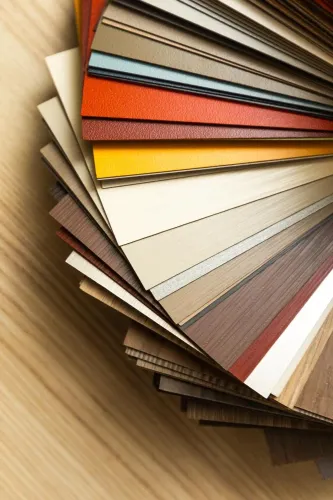
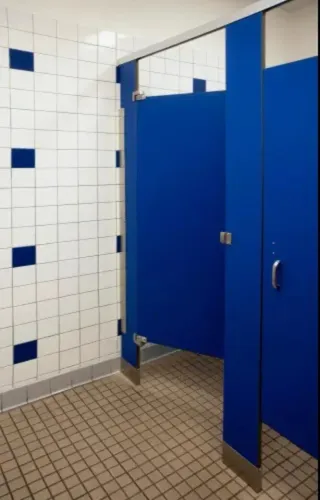
Choose decorative high-pressure laminate for shutters, wardrobes, wall panels and furniture where cost, colour choice and scratch resistance matter. Use postforming laminate for rounded countertop front edges, but only on compatible substrates and radii. Choose compact laminate for wet-room partitions, laboratory furniture or frequently washed surfaces because its self-supporting sheet has no exposed timber core.
Select solid surface for seamless-looking counters, integrated sinks and repairable, hygienic worktops.
| Option | Best fit | Main limitations |
|---|---|---|
| Decorative high-pressure laminate | Furniture, shutters and wall panels | Needs a dry, flat substrate; exposed edges and cut-outs need sealing |
| Postforming laminate | Worktops with a factory-formed rounded front edge | Cannot replace correct substrate support or protect sink cut-outs |
| Compact laminate | Wet areas, partitions and high-use surfaces | Needs designed joints, fixings, edge treatment and movement allowance |
| Solid surface | Seamless counters, coved backsplashes and integrated basins | Large panels need support, movement gaps and correctly placed seams |
Specify laminate by intended use and EN 438 performance properties, not colour alone. A horizontal worktop needs stronger wear, impact, scratch, stain and heat resistance than a wall panel. Dark gloss finishes reveal fingerprints and water marks; textured finishes hide abrasion but hold grease.
- Seal exposed plywood edges, end-grain-like cores and every sink or tap cut-out.
- Keep seams away from unsupported cut-outs and provide continuous support beneath joints.
- Leave wall movement gaps and follow the solid-surface manufacturer’s fixing centres.
- Provide drainage and ventilation; MR, BWR and BWP labels do not make unsealed edges waterproof.
Ask solid surface suppliers for the installation manual, adhesive system and repair procedure before fabrication.
Compare Century Plywood dealers and Greenply Plywood dealers on supply quality
Verify the dealer before comparing Century Plywood dealers and Greenply Plywood dealers on price or stock. Ask for authorised dealer status, the manufacturer’s invoice, and the exact product code. Confirm the ISI mark, IS 303 or IS 710 reference where applicable, stated thickness, adhesive classification, and whether the quoted sheet is calibrated.
Check the delivered lot, not only a six-inch sample. Record these plywood batch details before fabrication:
- Batch or lot number, manufacturing date and invoice description
- Actual thickness at several points, squareness and flatness
- Face and back veneer quality, core gaps, overlaps and visible delamination
- Matching batch numbers across sheets where a continuous veneer appearance matters
- Replacement terms for warped, damaged or inconsistent panels
Century Plywood dealers and Greenply Plywood dealers should be compared against the same evidence. A lower price is irrelevant if sheets from mixed lots produce shade variation, thickness problems or fabrication waste.
Measure supply quality this way:
| Check | What to verify | Why it matters |
|---|---|---|
| Authorisation | Current authorised dealer status | Reduces the risk of untraceable stock |
| Product identity | Brand, code, grade and IS reference on invoice and sheet | Prevents grade substitution |
| Lot consistency | Matching batch details and retained sample | Controls veneer and performance variation |
| Physical condition | Thickness, flatness, edges and core | Exposes unusable sheets before cutting |
V K Sanghvi can add practical value by checking these records across plywood, laminates and solid-surface orders, then coordinating compatible lots and delivery quantities for the fabricator. That comparison reduces rework before brand, price and availability become the deciding factors.
Related products
 | Merino Hanex Solid Surfaces Bring your creative ideas to life with Merino – Hanex Solid Surfaces, available at V. K. Sanghvi Pune, a trusted supplier in the region. View product → |
 | laminates ₹1780 Merino High-Pressure Laminates are made of absorbent kraft paper impregnated with melamine and phenolic resins as well as specially chosen decorative... View product → |
Inspect, store and approve materials before fabrication
Do not release sheets to fabrication until you inspect them in daylight and record the approval. Pune monsoon humidity can enter through open edges and packaging, causing sheet warping, bubbling, adhesive failure or movement after installation.
1. Match the delivery note to the order: confirm brand, product code, thickness, grade, quantity, batch number and dimensions. Check the plywood IS 303 or IS 710 reference where specified, plus the ISI mark and manufacturer branding.
2. Inspect every stack for bowed edges, damaged corners, open core gaps, delamination, splits, swollen areas and inconsistent face veneers. Hold any sheet with visible sheet warping rather than assuming fabrication will hide it.
3. Compare decorative sheets under the project lighting. Confirm the laminate shade code, surface texture, grain direction and batch consistency; mixing batches can create visible colour differences.
4. Check solid-surface panels against the technical data sheet. Record whether the resin is 100% acrylic, polyester or an acrylic-polyester blend, and verify thickness, colour, repair method and fabrication instructions.
5. Complete plywood storage on level, dry supports with full-length bearers; keep laminates and solid-surface panels flat, covered and separated from wet masonry, direct sun and standing water. Do not lean large sheets for long periods.
Allow materials to acclimatise in the installation room according to the manufacturer’s instructions. Start fabrication only after plaster, screed and paint are reasonably dry, moisture readings are acceptable, and the approved inspection record identifies each released batch.
Frequently asked questions
How do you match interior materials to the job?
Assess moisture, load, cleaning, heat, edge and joinery demands before choosing the substrate and surface finish.
What should you specify when buying plywood?
State the plywood grade, core construction, thickness, sheet size and intended use rather than relying on a showroom sample.
How should you compare Century Plywood dealers and Greenply Plywood dealers?
Compare stock consistency, sheet flatness, visible defects, batch traceability, delivery condition and the dealer’s ability to supply the required specification.
How do you choose between laminate and solid surface?
Compare cleaning, heat exposure, seams, edge details, repairability and the finish required for the application.
How should interior materials be inspected and stored?
Check sheets and surfaces before fabrication, record defects, keep plywood flat and dry, and approve cut-outs, joints and edges before work begins.
Related product
 | laminates ₹5300 Welcome to Luvih – where opulence meets style. Explore Super Matte surfaces, an ode to timeless elegance. View product → |