
A flooring quotation can look complete while leaving out the construction, moisture limits, preparation work, installation method, and warranty conditions that determine whether the floor performs. By the end, you will be able to verify the dealer, compare flooring types, inspect a sample, and test whether the written quote covers the full installation rather than only the boards.
Key takeaways
- Verify dealer authorisation directly with the manufacturer or official distributor.
- Match flooring construction to each room’s moisture, traffic and maintenance demands.
- Inspect samples, specifications, wear layers, cores, finishes and warranty terms.
- Get site preparation, installation, trims, wastage and future responsibility in writing.
Can the dealer prove that the quoted flooring is genuine and authorised?
A genuine carton does not prove that the seller is an authorised wooden flooring dealer. Confirm the brand authorisation and product line verification directly with the manufacturer or its official distributor before paying a deposit.
1. Ask the dealer for a current authorisation letter naming the company, trading address, brand, and quoted product line. Contact the manufacturer through its website—not a phone number printed only on the quotation—and confirm the dealer’s status, territory, and warranty eligibility.
2. Request a quotation showing the exact collection, product code, country of manufacture, board dimensions, finish, and batch or lot number. Match those details with the manufacturer’s catalogue and retain photographs of carton labels, seals, and barcodes at delivery.
3. For imported or certified timber, verify the FSC Chain of Custody certification number and scope in the FSC database. The logo alone proves nothing; FSC traceability does not certify wear resistance, moisture performance, installation, or floor flatness.
4. Obtain the manufacturer’s written installation, delivery, storage, acclimation, and maintenance instructions. The dealer must record flooring moisture content, site temperature and humidity, and the concrete test used—ASTM F2170 in-situ relative humidity or ASTM F1869 calcium chloride—with the applicable product limit.
5. Read the exact product warranty before ordering, including exclusions and who pays removal, disposal, replacement, and reinstallation. If emissions matter, request documentation for the exact finished product and finish, such as FloorScore, not a generic “eco-friendly” claim.
Which flooring construction suits each room and use?
Choose the construction by moisture, traffic, and whether you want to repair the surface rather than replace boards.
| Option | Construction, lifespan and appearance | Repair, maintenance and moisture | Best room or use |
|---|---|---|---|
| solid wood flooring | One timber species through the board; long service life because it can be sanded and refinished repeatedly; strongest natural grain variation. | Repairable by sanding or replacing boards, but it moves with humidity and needs prompt spill removal. Avoid routinely wet areas. | Bedrooms, living rooms, and lower-traffic offices; use cautiously in corridors. |
| engineered wood flooring | Real-wood veneer over a layered wood core; stable and durable, with service life tied to veneer thickness; appearance closely matches solid timber. | A thick veneer permits refinishing; a thin veneer usually permits only light repairs. Clean with a damp, not wet, method and protect against standing water. | Bedrooms, living rooms, offices, and corridors when the specification suits traffic. |
| laminate flooring | Printed wood image over a fibreboard core and wear layer; consistent appearance and good abrasion resistance, but it cannot be sanded. | Replace damaged planks; keep water away from joints and edges. Moisture-resistant ratings do not make every product suitable for wet cleaning. | Bedrooms, living rooms, offices, and dry corridors with heavy foot traffic. |
| wood-look vinyl flooring | Printed wood design through a resilient vinyl plank or tile; stable appearance and no timber refinishing cycle. | Easy to clean, highly moisture-tolerant, and replaceable plank by plank; inspect seams and subfloor flatness. | Kitchens, entrances, corridors, offices, and high-traffic areas. |
For an office, verify rolling-load, furniture-load, cleaning-chemical, and commercial-traffic performance. Make the quotation state construction, total thickness, wear or veneer thickness, core, finish, click profile, and floating, glue-down, or nail-down installation method.
What should you inspect in the sample and product specification?
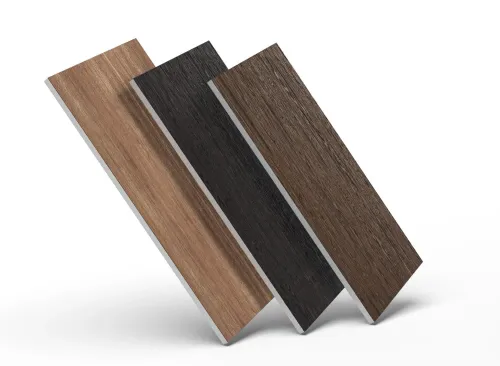
Reject any quotation that names only the wood species and colour. It must identify the complete construction, while the sample must show whether the quoted specification matches the product you will receive.
Ask the dealer to record:
- Solid or engineered construction, total thickness, wood flooring wear layer or engineered wood veneer thickness, and flooring core construction.
- Board length, width, thickness, grade, acceptable colour and grain variation, and whether mixed-board variation is expected.
- Edge quality, bevel profile, surface finish, texture, gloss level, and the exact slip-resistance classification or test result.
- Click locking system or other joint profile, along with the approved underlay, adhesive, and installation method.
- Whether the floor is designed for floating, glue-down, or nail-down installation, and which substrate conditions each method requires.
Approve a physical sample from the proposed production batch, but do not demand identical boards. Natural wood and engineered flooring can vary in sapwood, mineral streaks, grain, colour, and lighting response; put the acceptable grade and variation range in the purchase order.
| Installation method | What the specification must state | Cost or failure risk |
|---|---|---|
| Floating | Compatible underlay, click profile, perimeter gaps, door-jamb treatment, transitions, and maximum uninterrupted area | Movement, hollow sounds, or joint opening |
| Glue-down | Approved adhesive, substrate moisture limit, surface preparation, and expansion details | Debonding, cupping, or adhesive staining |
| Nail-down | Fastener type and spacing, subfloor type, and board compatibility | Loose boards, squeaks, or split edges |
Record the manufacturer’s acclimation instructions, plus flooring moisture content and site temperature and humidity before installation.
Has the dealer priced the site conditions and installation risks?
A site visit must happen before ordering, not after cartons arrive. Require dated photographs, room measurements, a marked-up plan, test readings, and a written installation method; a square-metre price alone hides preparation and detailing costs.
1. Inspect the subfloor for flatness, structural soundness, loose or protruding fasteners, cracks, hollow areas, grease, dust, paint, plaster, and other contamination. Record the measuring method and results, then price grinding, patching, or levelling compound separately. Excessive variation creates hollow spots, squeaks, joint stress, cupping, and finish failure.
2. Require subfloor moisture testing, not a statement that the slab is “dry.” For concrete, record whether the installer used in-situ relative humidity testing under ASTM F2170 or calcium-chloride testing under ASTM F1869, plus the product-specific limit. These are different measurements.
The dealer must also record room temperature, humidity, flooring moisture content, and the manufacturer’s flooring acclimation requirements; do not accept a standard acclimation period for every product.
3. Put the complete method in writing: compatible underlay and adhesive, fixing method, perimeter and cabinet expansion gaps, maximum uninterrupted areas, door clearances, jamb cuts, transition profiles, skirting, and required expansion joints. Document delivery and storage conditions: cartons must stay dry, protected from rain and contamination, and stored as the manufacturer directs.
If V K Sanghvi supplies other interior materials, keep its delivery records separate from the flooring dealer’s site documentation.
Does the written quotation cover the complete cost and future responsibility?
An accurate wood flooring installation quotation starts with the measured net floor area, not a rounded room size. Recalculate quantity from board length, width, and coverage per carton, then compare the unit rate, carton price, and total with the drawing. Ask the dealer to show every calculation.
- Set the cutting waste allowance for the actual layout: straight-laid boards need a different allowance from diagonal, herringbone, or chevron patterns.
- Price selective grading separately if colour matching will discard more boards.
- Confirm whether the quoted quantity includes spare cartons from the same production lot for future repairs.
The quotation must identify the complete floor system and every charge, not only the timber species and finish.
- Underlay, compatible adhesive, nails or staples, trims, transitions, and other fixing materials
- Installation labour, furniture moving, transport, stair carrying, and removal or disposal of existing flooring
- Subfloor preparation, moisture protection, skirting adjustments, door trimming, and finishing work
- Applicable taxes, cleaning, maintenance products, and post-installation visits
Request the flooring warranty and separate installation workmanship coverage before paying. Record exclusions such as excess moisture, unsuitable humidity, poor subfloor preparation, unauthorised adhesive, building movement, poor maintenance, and accepted visible defects. The dealer must state who pays for removal, disposal, replacement material, and reinstallation after an approved claim.
Retain unopened same-lot cartons where storage permits; this protects future repair stock and commercial flooring performance.
Frequently asked questions
How can you verify that a wooden flooring dealer is genuine and authorised?
Ask for the manufacturer’s authorisation details, confirm the dealer and quoted product line directly with the manufacturer or official distributor, and check the carton’s batch and product information.
Which wooden flooring construction suits different rooms?
Choose construction according to moisture exposure, traffic, movement, maintenance demands and the installation area. Compare solid wood, engineered wood and laminate flooring rather than treating them as interchangeable.
What should you inspect in a wooden flooring sample and specification?
Check the surface finish, colour consistency, board dimensions, wear layer, core construction, locking or fixing method, edge profile, moisture guidance, maintenance instructions and warranty exclusions.
What site conditions and installation risks should a dealer price?
The quotation should address subfloor levelness and moisture, acclimatisation, removal of existing flooring, door clearance, transitions, skirting, trims, wastage, delivery access and installation conditions.
What should a complete wooden flooring quotation include?
Require product identification, quantities, wastage, delivery, underlay, adhesives or fasteners, preparation, labour, trims, taxes, payment terms, warranty documents and responsibility for defects or installation failures.